Design
Translate a clinician's narrative into a governed care workflow and patient application.
FROM CLINICAL INTENT TO PATIENT EXPERIENCE
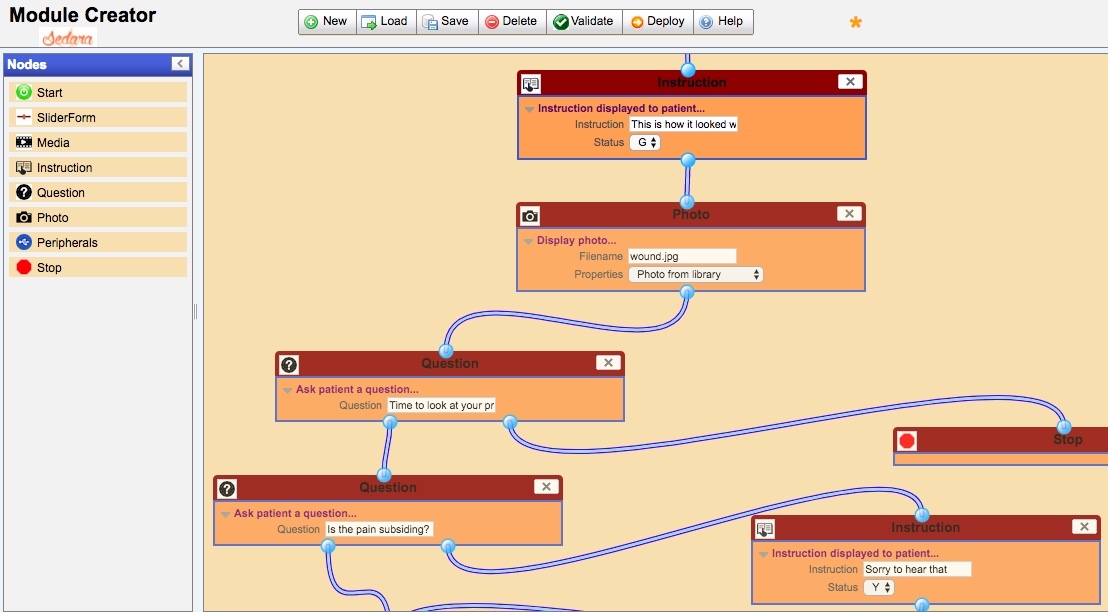
Sedara makes the application definition visible, reviewable, and editable—not a black box.
Explain the care pathway, protocol, or follow-up plan in your own words.
Sedara asks about missing, ambiguous, or clinically important details.
Approved nodes, content, questions, and escalation rules become a structured workflow.
Clinicians inspect, edit, validate, and approve before deployment to patients.
A clinician can ask for daily pain scoring, fever and wound-swelling checks, prescribed exercises, an approved rehabilitation video, and care-team escalation when responses are concerning.
The resulting application can include sliders, instructions, questions, media, photos, camera capture, peripherals, chatbot education, and server-side rules.
WHY IT MATTERS
Most patient-engagement solutions require substantial coding and still struggle to reflect each physician’s protocol, each practice’s standards, and each patient’s needs. Sedara combines AI-assisted workflow creation with a governed care platform, so clinicians can turn their approach into a reviewable native patient application without starting from a blank canvas.
Sedara supports individualized instructions, reminders, monitoring, and escalation across iPhone, iPad, and Android. It is also designed for co-morbidities, enabling multiple care modules to work together as one patient experience.
WHY SEDARA AI
AI helps clinicians create applications faster while Sedara preserves the structured models, approved components, and care-team oversight required for real care delivery.
Start with a narrative description of the care workflow rather than a blank application canvas.
Sedara identifies incomplete or ambiguous requirements and asks focused follow-up questions.
Every generated workflow remains editable in the visual modeler and subject to clinician approval.
Generated applications retain a clear node-and-rule definition that care teams can inspect and refine.
Approved server-side rules can turn concerning patient data into visible care-team escalation.
Deploy the same personalized care experience across iPhone, iPad, and Android devices.
INTELLIGENCE AT EACH STAGE OF CARE
Translate a clinician's narrative into a governed care workflow and patient application.
Capture patient-reported outcomes and peripheral measurements throughout the care journey.
Apply approved rules for care-team escalation while patients access trusted guidance for their condition.
Sedara's core platform is protected by U.S. Patent No. 12,706,182 B2. It creates, personalizes, deploys, and updates native mobile care applications across conditions, physicians, and patients. Additional AI-related intellectual property is pending.
Describe a workflow in plain language, then refine it in Sedara's visual modeler without custom coding.
Give patients clear protocol guidance, reminders, approved video and audio, photos, camera capture, and condition-specific education throughout recovery.
Keep a structured, inspectable definition from the clinician's request through the workflow, rules, and deployment.
Tailor logic, interface, content, scheduling, and the patient experience to each practice, condition, and patient.
Deploy approved application modules across Android, iPhone, and iPad; multiple modules can work together as one patient experience for co-morbidities.
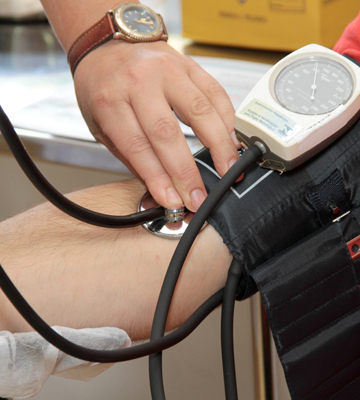
Capture patient interactions and peripheral measurements—such as blood pressure, weight, blood glucose, heart rate, temperature, and EKG—to spot concerning trends and escalate through approved care-team rules.
Detailed and summary reporting on patient interactions and measurements flags higher-risk patients and supports coordination among physicians, nurses, patients, and caregivers.
Let patients ask free-form, condition-specific questions and receive trusted multimedia guidance in text, images, and video.
CONNECTED CARE CAPABILITIES
From verification and deployment to monitoring and proactive intervention, Sedara carries the workflow through real-world patient care.
Capture interactions and measurements, identify concerning trends, and notify the care team for proactive follow-up.
Detailed and summary reports surface patient status so care teams can focus on people who need attention.
Multiple condition-specific modules can run together on one device as a single patient experience.
Use available health information from Apple HealthKit on iPhone and Google Fit on Android.
Connect native patient applications to peripherals such as blood-pressure, weight, glucose, and other supported devices.
Automated application-model and rule verification helps ensure the quality of each application before deployment.
Sedara can customize application logic and interface elements to reflect each practice’s preferences.
Rapidly deploy approved modules to patients and caregivers across Android, iPhone, and iPad from the same native application.
In a 30-minute demonstration, describe a care workflow and see how Sedara turns it into a reviewable patient application.
For product, partnership, and strategic discussions: